Effortless Couture: Martina Liana Lace Gowns We Adore Right Now
/There’s something about lace that will always feel so classically bridal. We’re loving how designers, like Martina Liana, are taking those classic elements and giving them a modern moment with exposed corsetry, basque waists and off-the-shoulder sleeves.
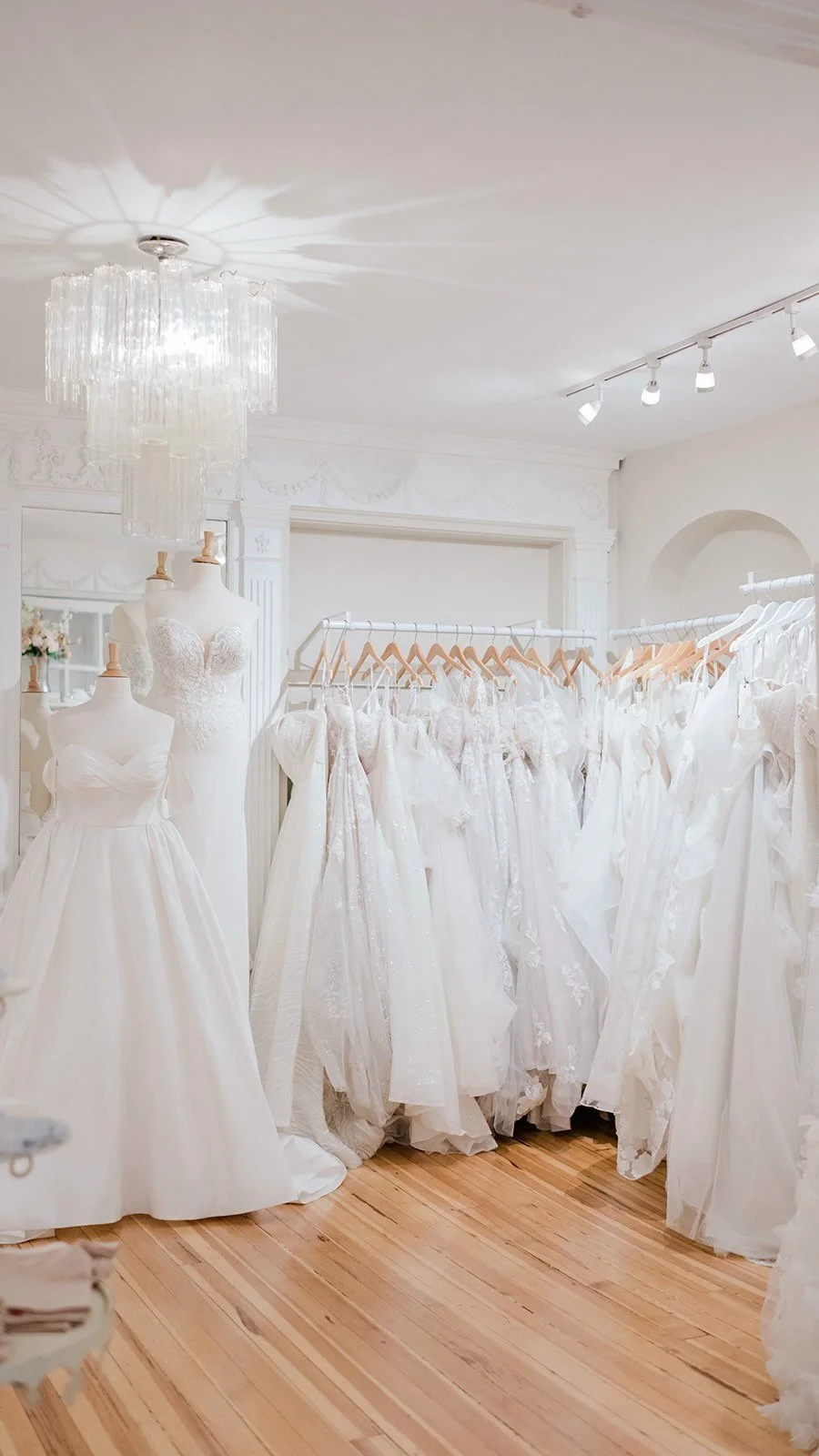
At Lily Saratoga, we’ve always adored Martina Liana for the way the collection blends these timeless details with fashion-forward design. With our Martina Liana Designer Preview Show coming this October, there are even more of the gowns we love on the way!
Here are a few of our current favorites:
Martina Liana Style ML2070
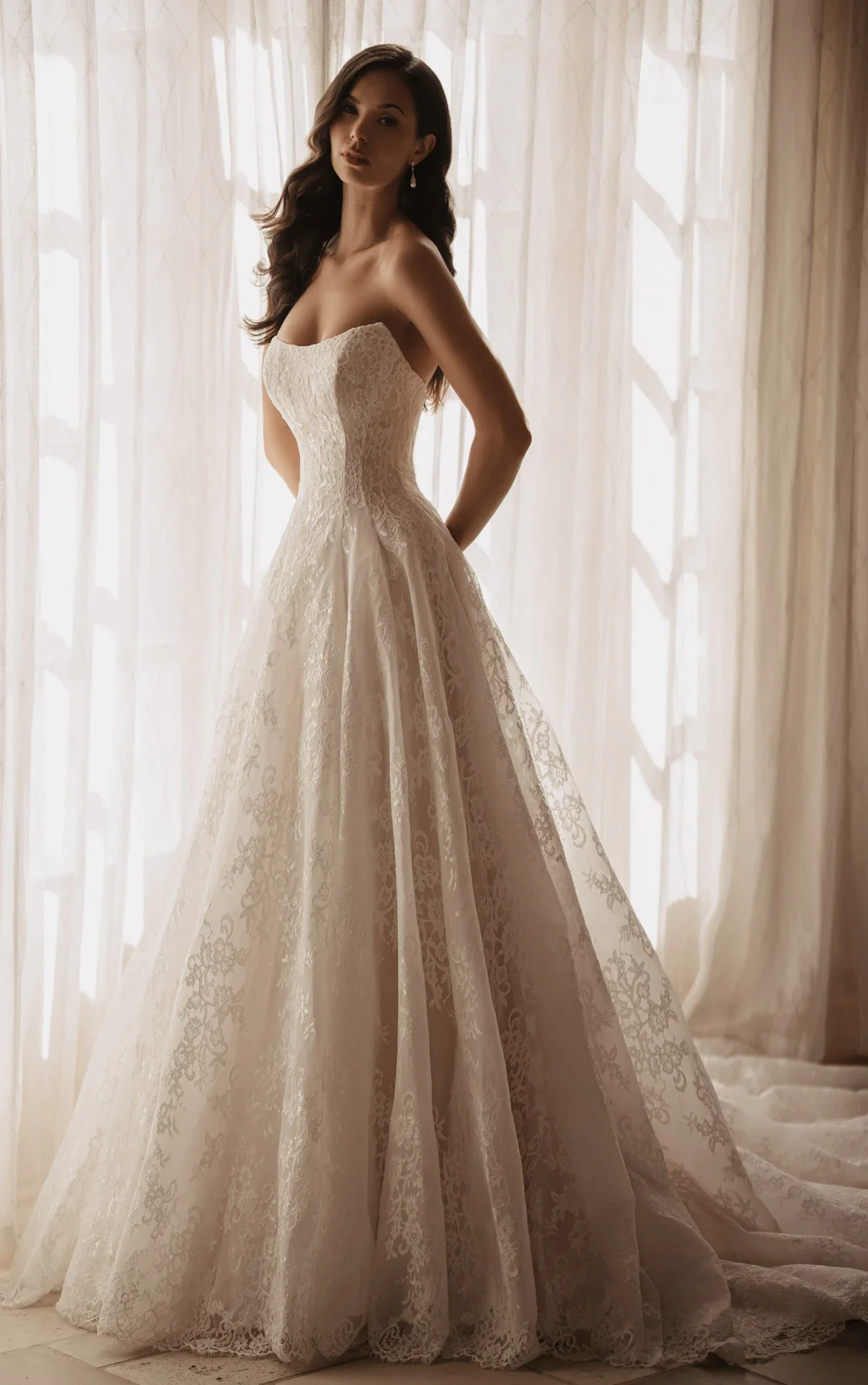
For the bride who loves lace but wants a clean, sophisticated silhouette, ML2070 is the perfect pick.
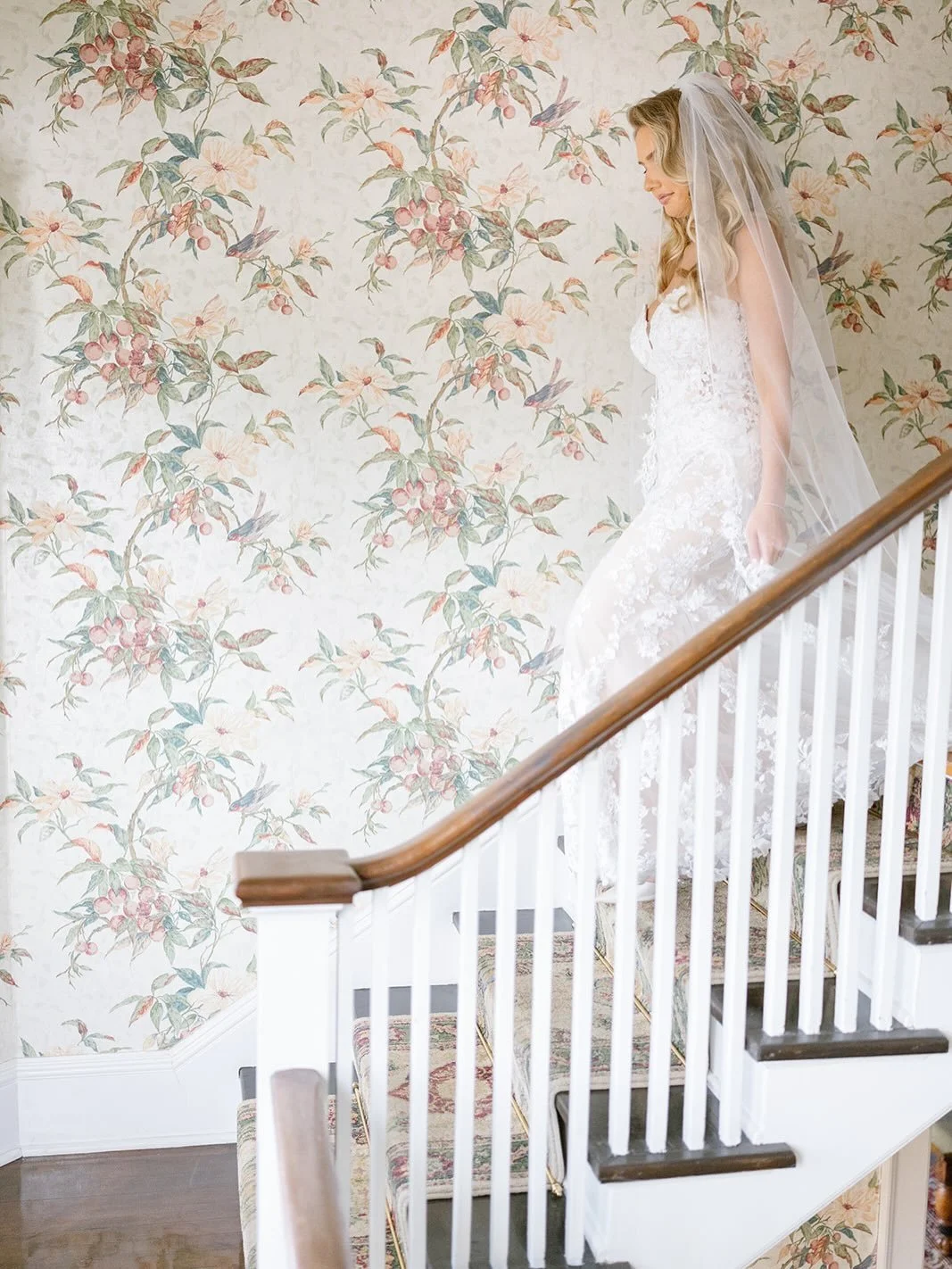
This strapless sweetheart A-line gown is covered in floral lace from bodice to hem, creating beautiful texture without overwhelming the silhouette. The fitted bodice gives way to a soft, sweeping A-line skirt, while the scalloped lace train creates the kind of back view that deserves its own moment walking down the aisle.
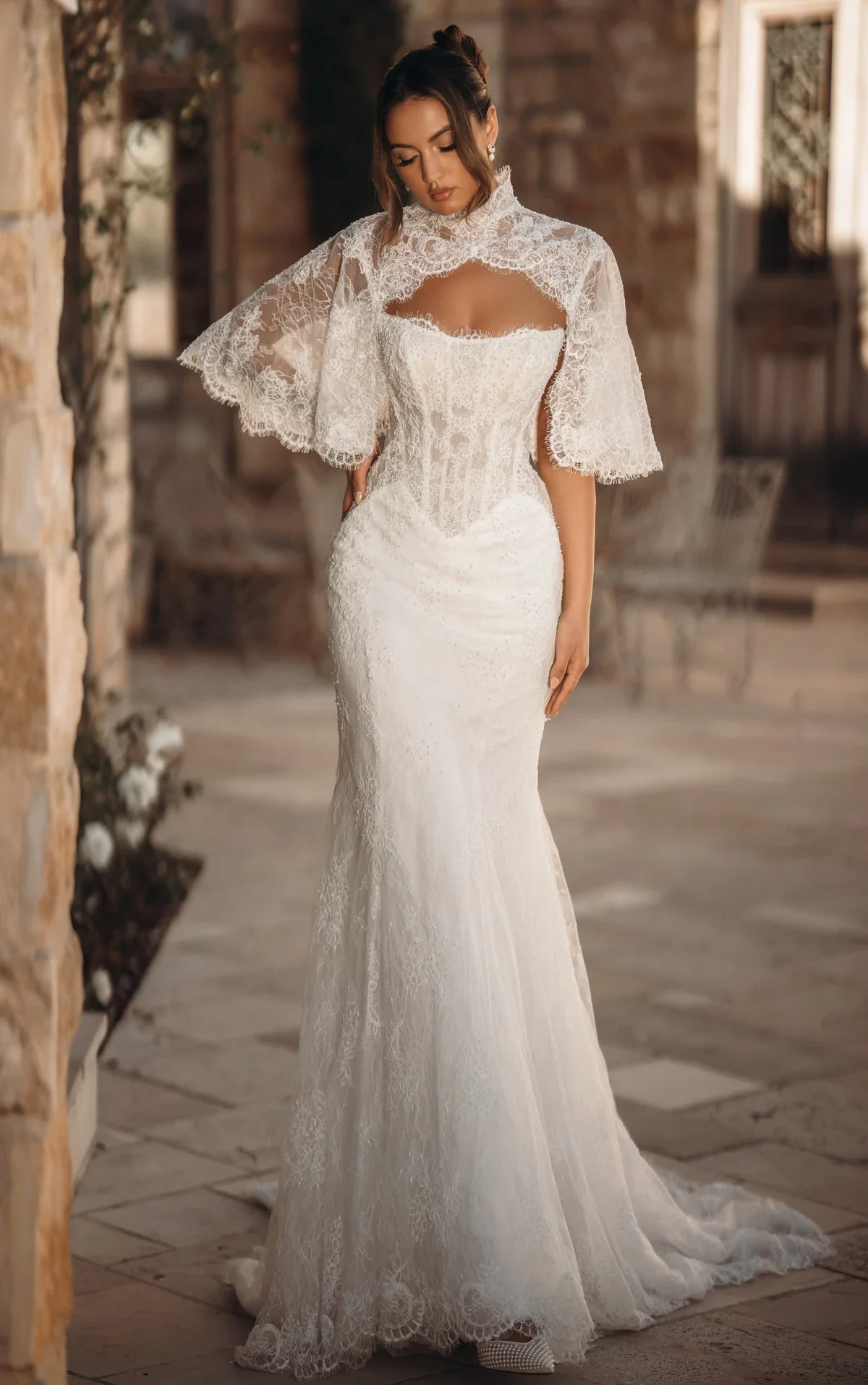
Martina Liana Style ML2010
We love a wedding dress that gives you options, and ML2010 delivers.
The fitted lace silhouette is beautiful on its own, but the detachable lace cape completely transforms the look. With its high neckline and soft flutter sleeves, and intricate pearl and glass beading, the cape adds an unexpected couture element that feels sophisticated and fashion-forward.
This Martina gown also features a basque waist, which is on-trend and oh-so flattering.
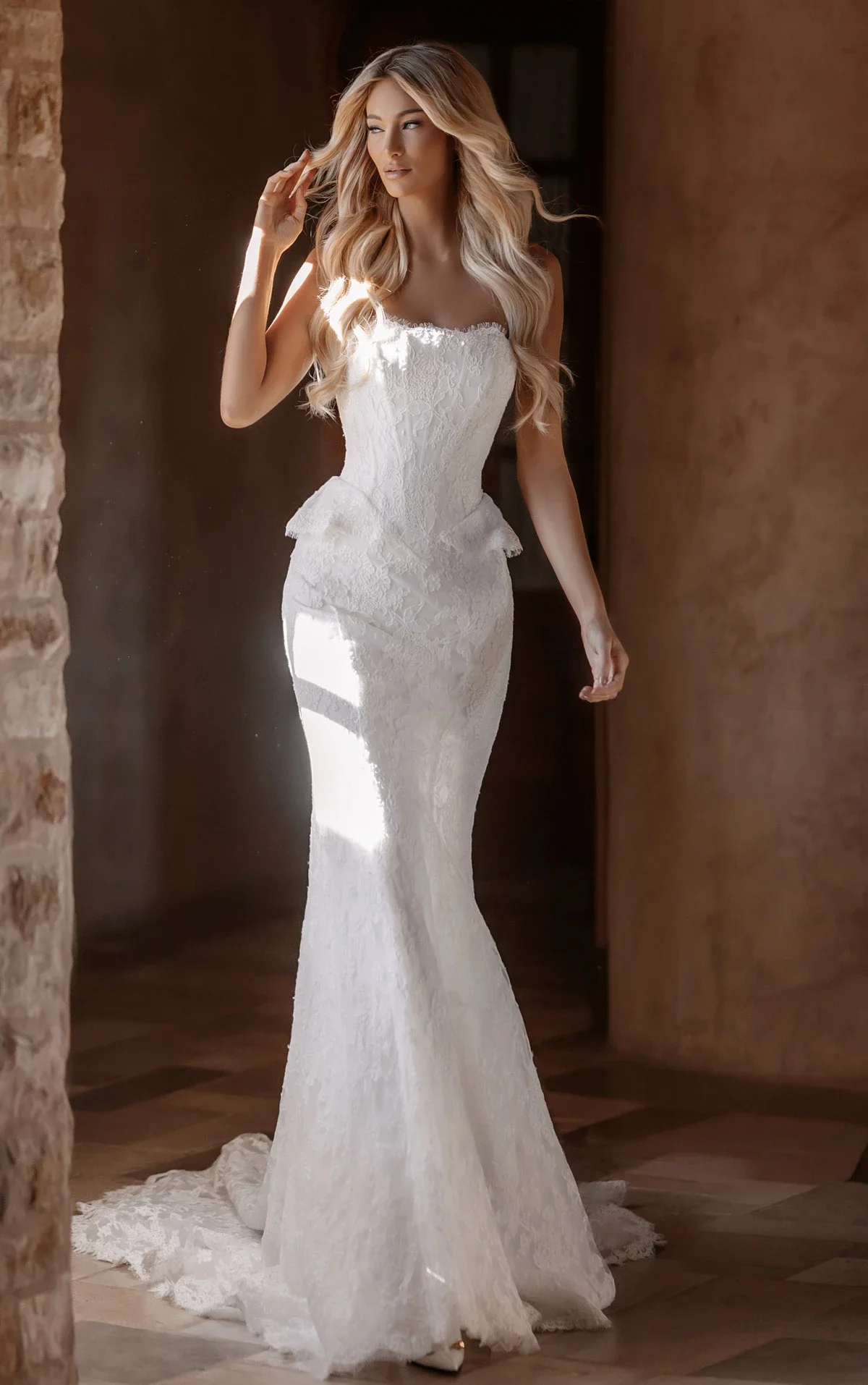
Martina Liana Style ML2042
ML2042 takes classic lace and gives it a modern, structured edge.
This strapless fit-and-flare gown features a gentle scoop neckline with soft eyelash lace, and a corset bodice that creates beautiful support and definition before flowing into a fitted lace silhouette. But our favorite detail may be the optional peplum.
The addition at the waist completely changes the personality of the gown, adding a high-fashion element that accentuates the waist, and allows for the lace and silhouette beneath to shine. It’s an unexpected detail that makes this gown feel especially current.
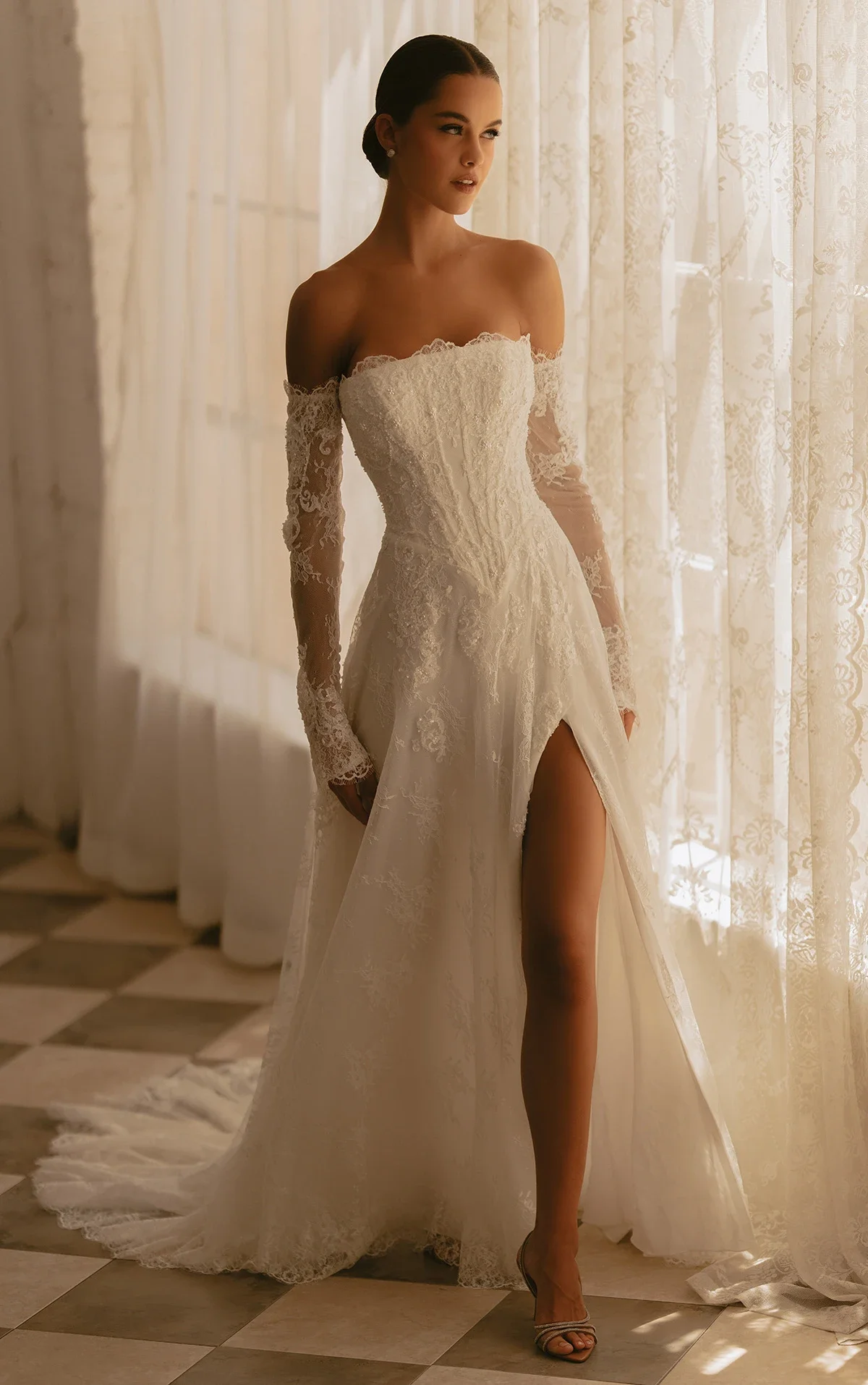
Martina Liana Style ML1954
If your bridal Pinterest board is filled with basque waists, corsetry and romantic lace, you need to try ML1954.
Layers of embroidered scrolling appliqués over delicate Chantilly lace give this A-line gown incredible dimension, while the exposed basque-waist corset creates that elongated, sculpted shape so many of our brides are loving right now.
Optional lace sleeves offer yet another way to personalize the gown and create a completely different look.
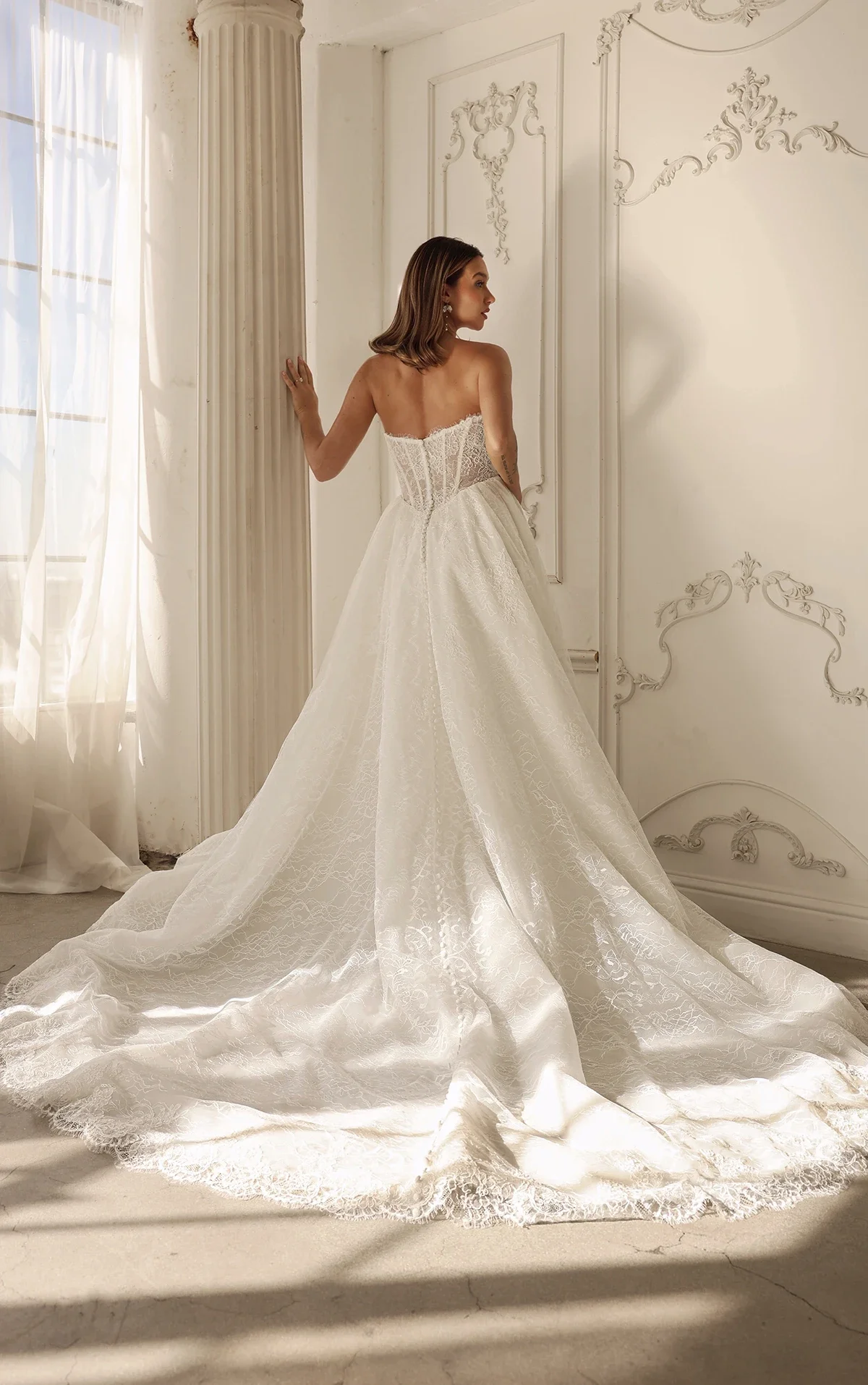
Martina Liana Style ML1882
Some dresses serve jaw-dropping drama as you see them walking down the aisle, and ML1882 is one of them. The fabric-covered buttons trailing down the train to a scalloped lace hem brings that wow moment.
The A-line silhouette keeps the look soft and effortless, while exposed corset boning adds structure and just the right amount of modern edge. This gown is a beautiful choice for the bride who wants to feel timeless, romantic and regal, but still comfortable.
Coming THIS MONTH: Our Martina Liana Designer Preview Show
And now for the part we’re especially excited about.
This October, Lily Saratoga will host an exclusive Martina Liana Designer Preview Show, giving our brides the opportunity to shop an upcoming collection before it has officially been released.
A Preview Show is one of the most exciting ways to shop for a wedding dress because you’ll have access to styles that aren’t even in production yet. For brides who love discovering something new, want to be among the first to wear an upcoming Martina Liana design, or simply want even more incredible options to try, this is an appointment you won’t want to miss.
Expect beautiful lace, thoughtful details, incredible construction and plenty of those wait until you see the back moments we love so much.
Book your appointment for our Martina Liana Designer Preview Show this October and come discover what’s next in bridal at Lily Saratoga.