Bridal Gown Terms Explained
/Your Wedding Dress Dictionary
If you’ve ever found yourself nodding along during a bridal appointment while secretly wondering, “Wait…what exactly is Mikado?” — you’re definitely not alone.
Wedding dresses come with their own vocabulary, and we certainly don’t expect you to know it before you walk through our doors at Lily Saratoga. But understanding a few common bridal terms can make it easier to describe what you love (and what you don’t!).
Here are some of the terms you’re most likely to hear while wedding dress shopping.
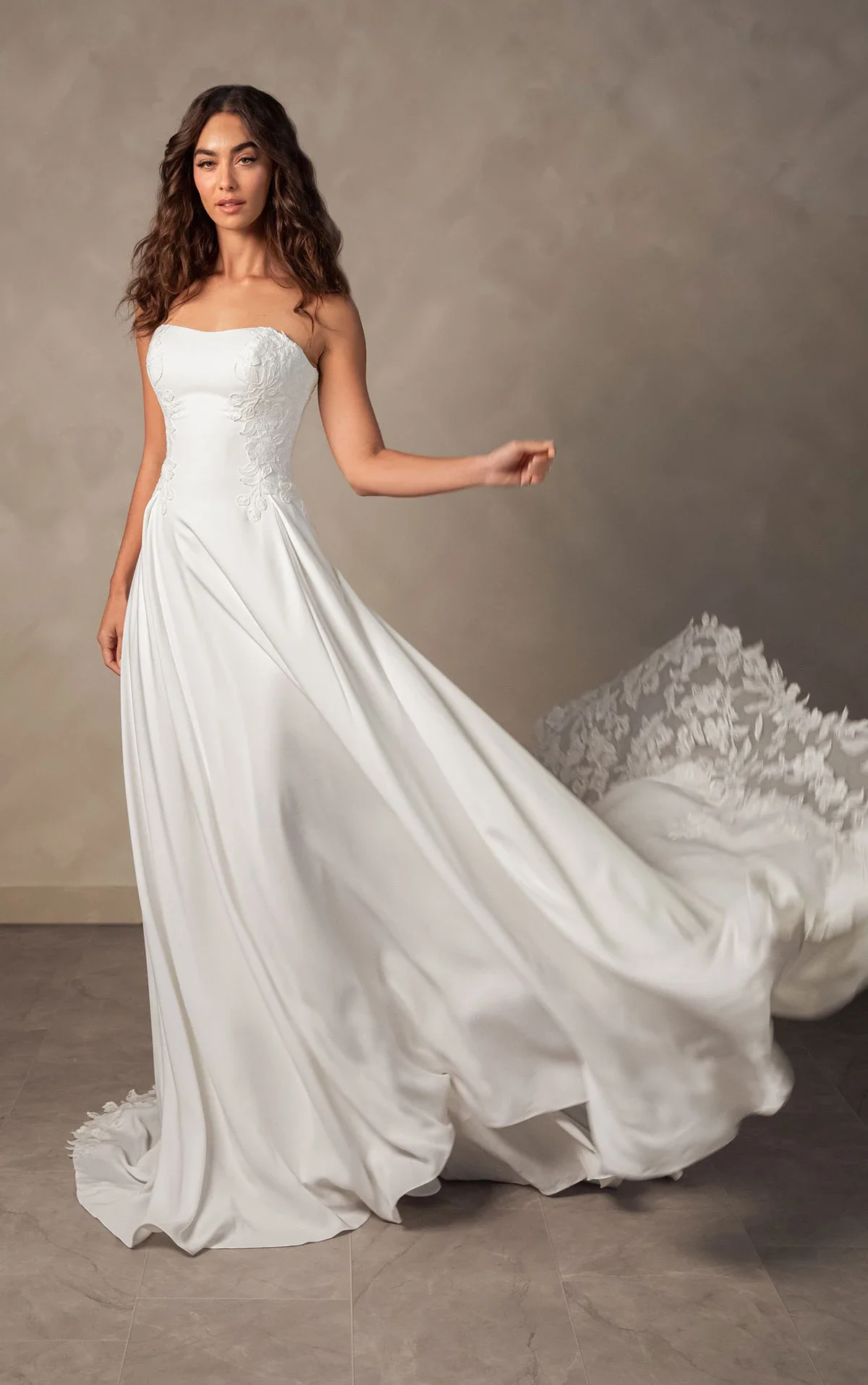
A-Line
An A-line gown is fitted through the bodice and gradually widens toward the hem, creating the shape of a capital “A.”
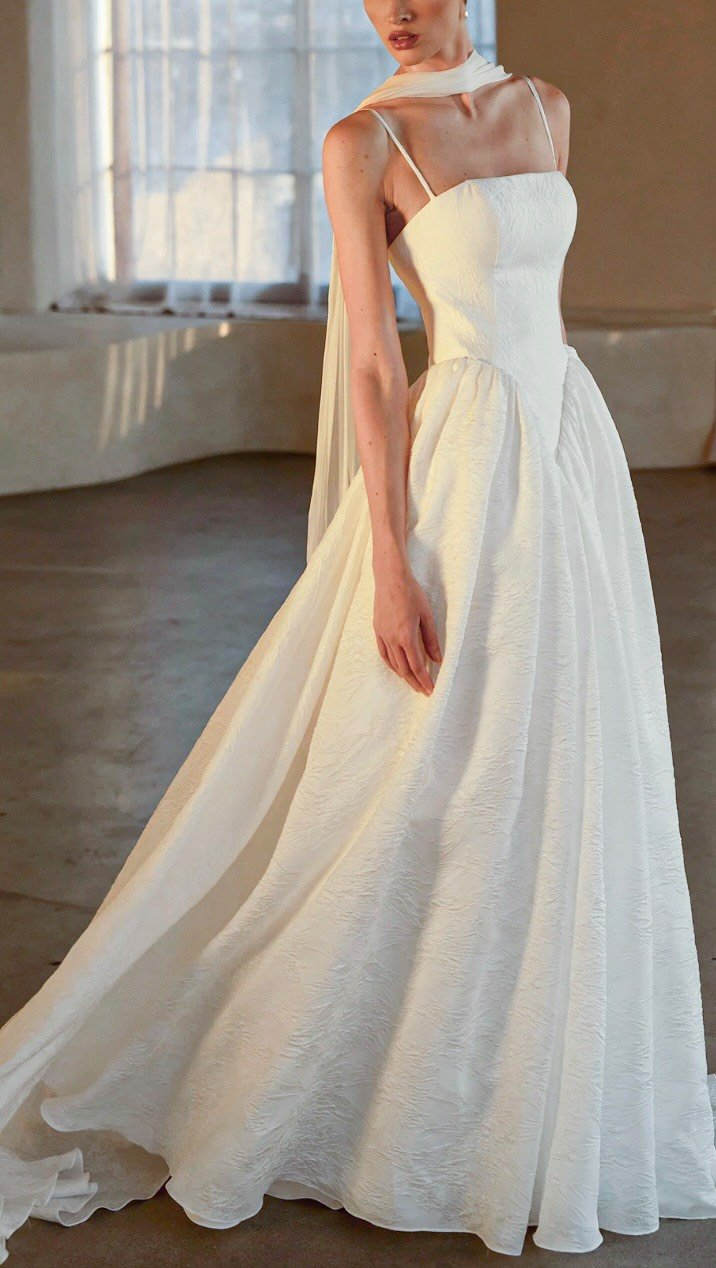
It’s one of the most popular and versatile bridal silhouettes. An A-line gives you movement and fullness without quite as much volume as a traditional ballgown. The overall look can also change dramatically depending on the fabric — think soft and romantic in tulle or more structured and classic in Mikado.
Basque Waist
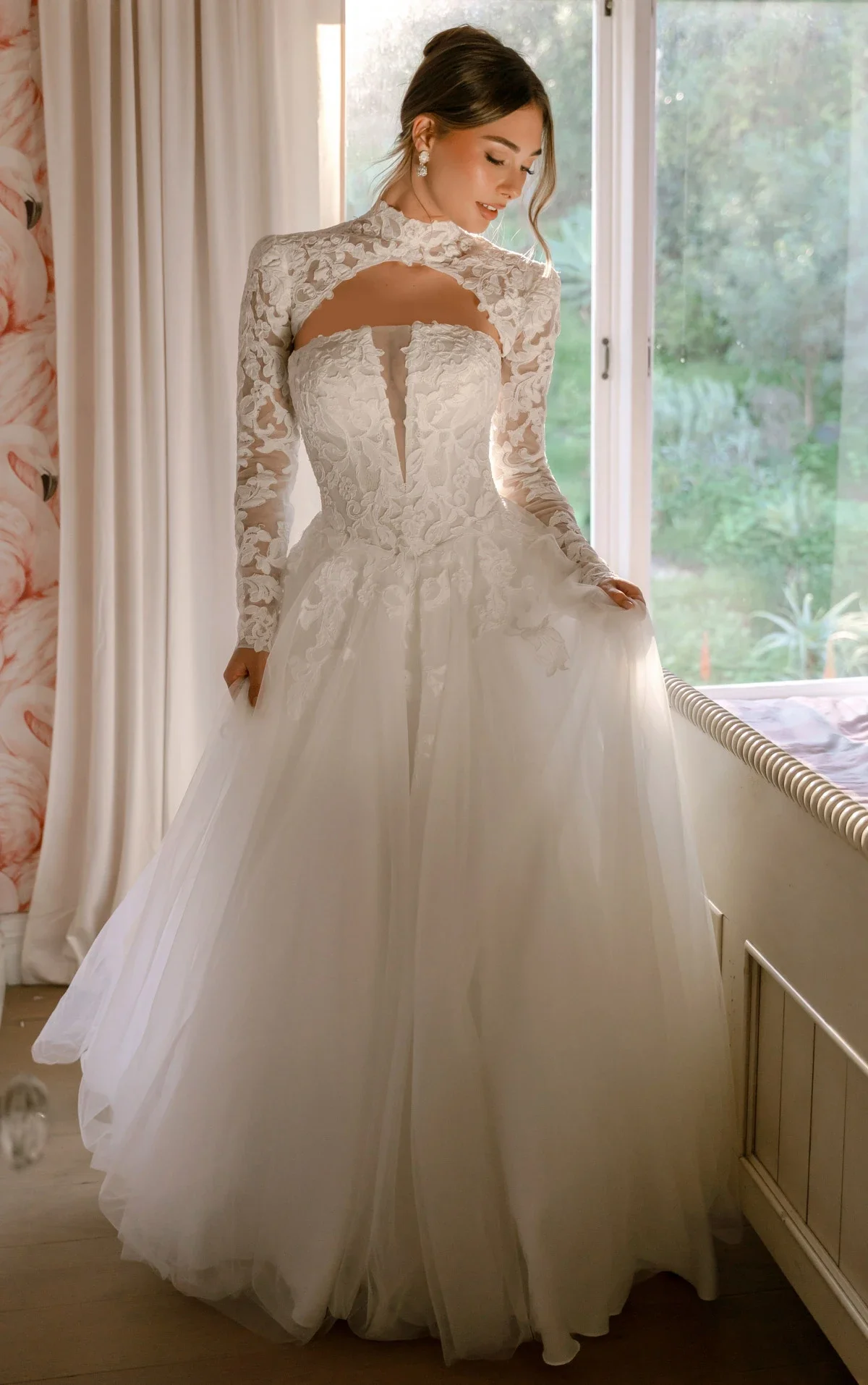
If you’ve been looking at wedding dresses lately, you’ve probably seen this one!
A Basque waist dips into a V or U shape below the natural waistline, creating an elongated, corseted look through the torso. While Basque waists have historical roots, they’ve made a major comeback in bridal fashion and can be found on everything from clean, structured gowns to romantic lace ballgowns.
Bustle
A bustle is added during alterations and allows the train of your wedding dress to be lifted and secured after the ceremony. In other words: gorgeous long train for the aisle, hands-free dancing at the reception!
There are several types of bustles, and your seamstress will determine which works best with your gown’s fabric, construction and train.
Cat-Eye Neckline
A cat-eye neckline is a strapless neckline that curves upward into subtle points at either side of the bust. Think of it as a more dramatic, fashion-forward cousin of the classic sweetheart neckline. Cat-eye necklines have become especially popular on structured corset bodices and clean, modern gowns.
Crinoline
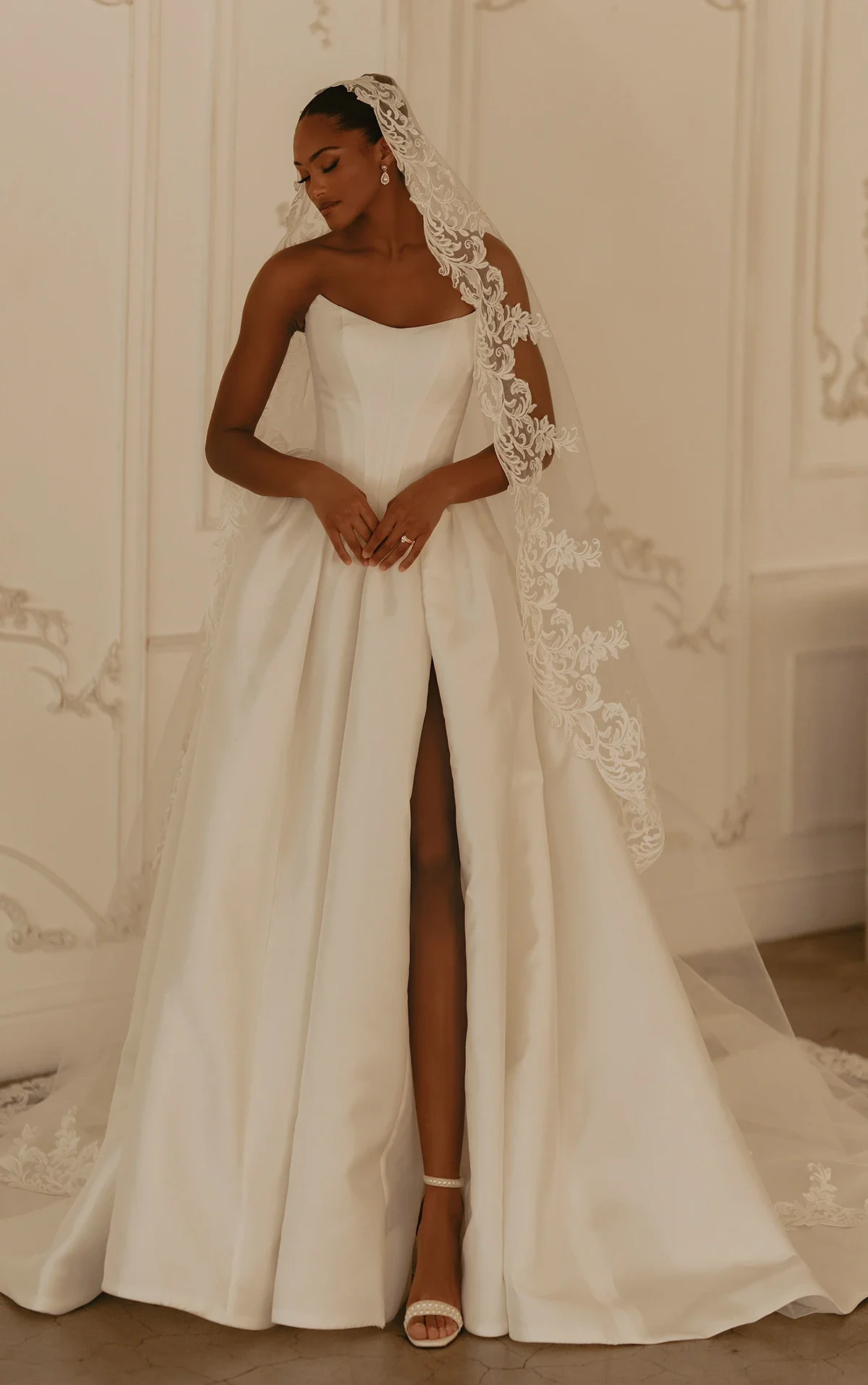
Crinoline is the stiff netting or structured material underneath a skirt that helps a wedding gown hold its shape and volume. More crinoline generally means a fuller skirt, while reducing or removing some of it can sometimes create a softer silhouette.
Fit-and-Flare
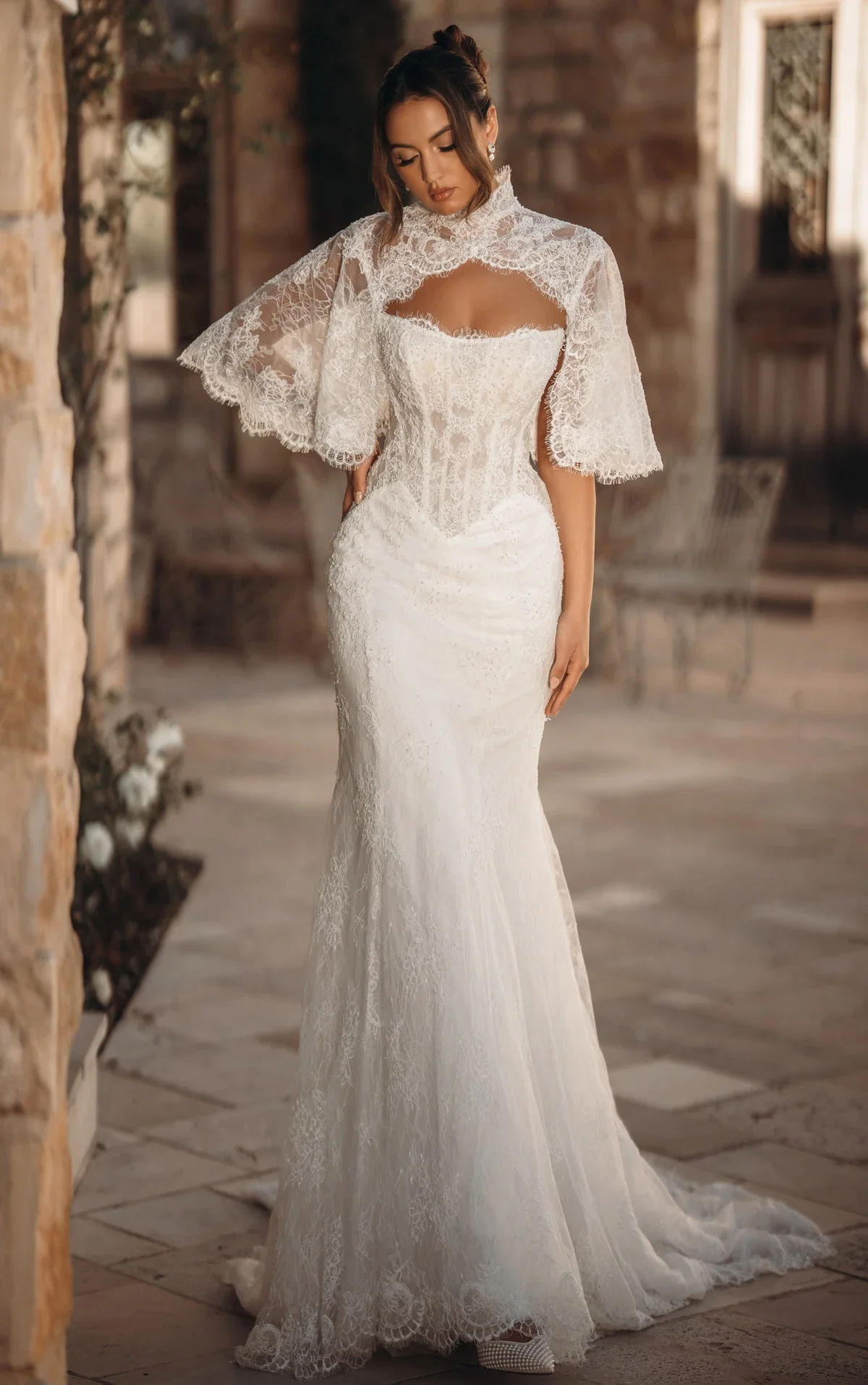
A fit-and-flare gown is fitted through the bodice, waist and hips before gradually flaring out farther down the skirt.
It’s a great silhouette for a bride who wants to highlight her shape while still having movement through the bottom of the gown. You may also hear terms like mermaid or trumpet, which are variations of this general silhouette with differences in where and how dramatically the skirt begins to flare.
Illusion Tulle
Illusion tulle is an extremely fine, sheer netting designed to almost disappear against the skin. Designers use it to create plunging necklines, sheer backs, cutouts and “floating” lace or beaded details while still providing support and structure.
Appliqué
An appliqué is a decorative element — often lace, embroidery, flowers or beading — that is individually attached to the fabric of a gown rather than being part of the base fabric itself. Appliqués can add texture and dimension and can be scattered delicately throughout a gown or layered heavily for a more dramatic look.
Mikado
Mikado is a fabric, not a silhouette. It’s a heavier, structured fabric with a smooth finish and subtle sheen. Because Mikado holds its shape beautifully, it’s especially popular for structured A-lines, ballgowns, dramatic pleating and architectural details. It gives a gown that polished, elevated look without feeling overly shiny.
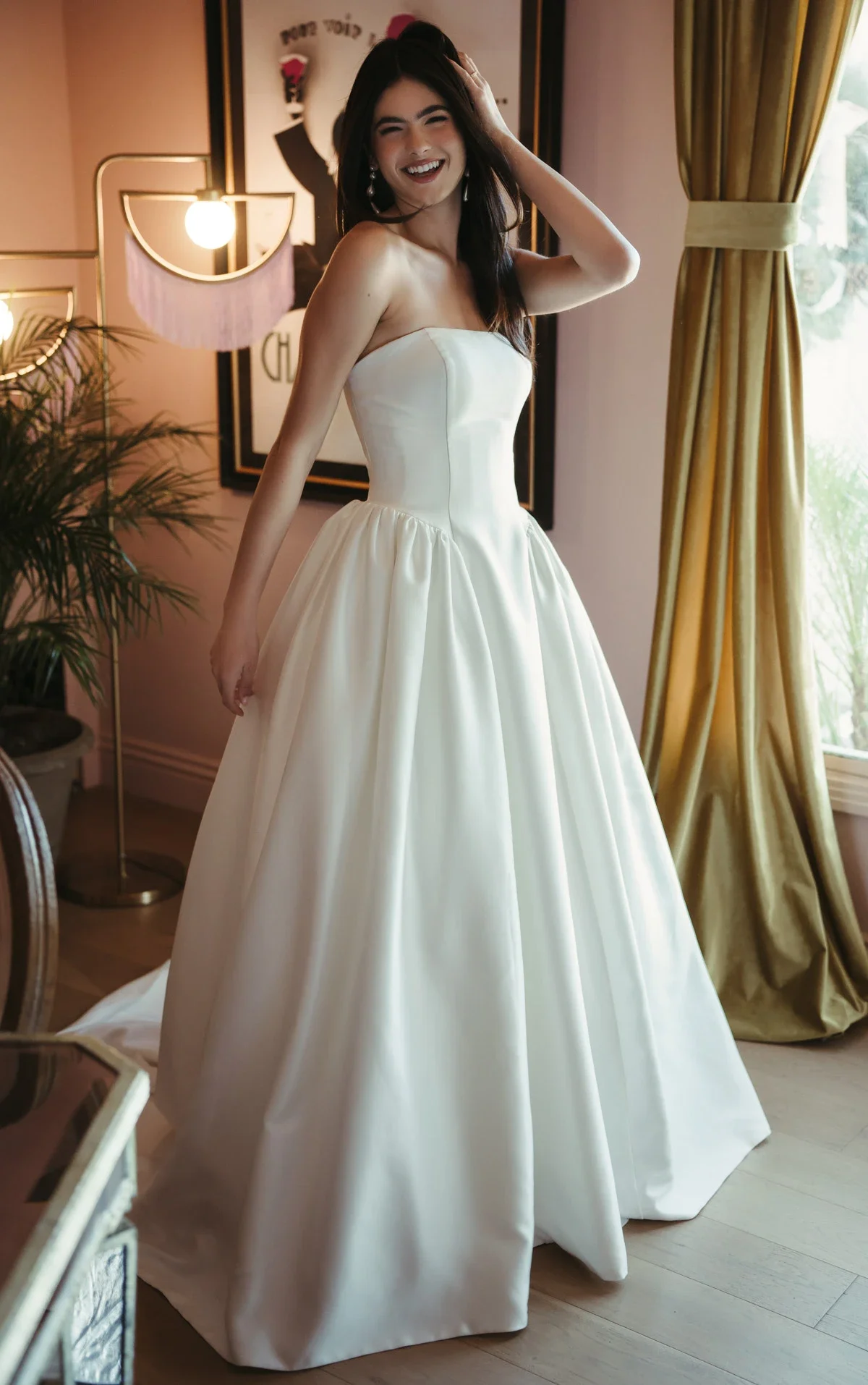
Chapel Train vs. Cathedral Train
The difference is all about length and drama!
A chapel train extends a few feet behind the gown and gives you that beautiful bridal moment without being overly dramatic. It’s one of the most common train lengths.
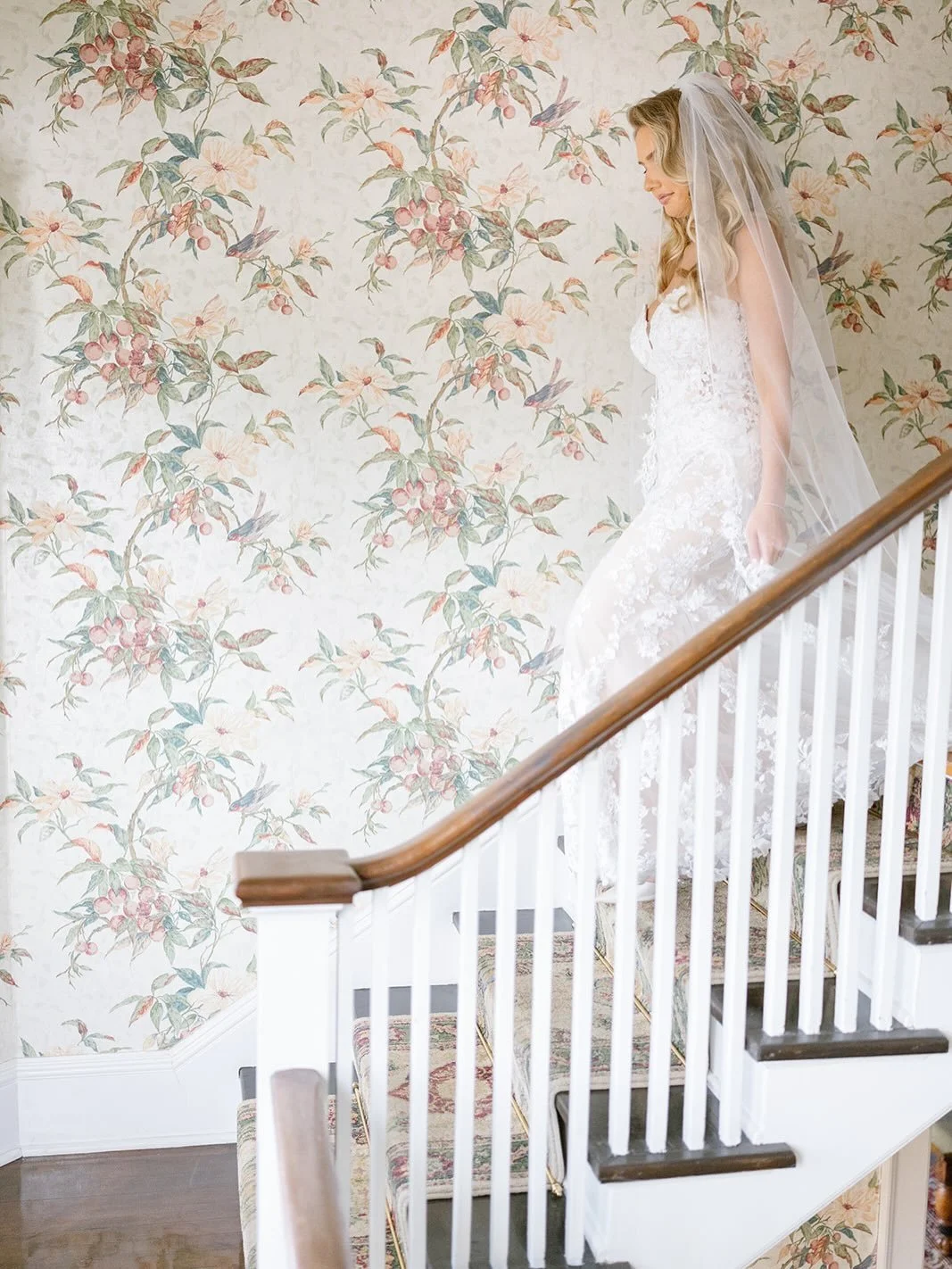
A cathedral train extends significantly farther behind the bride, creating a much more dramatic effect. If you’re picturing a grand entrance with a long train trailing behind you down the aisle, cathedral may be what you have in mind.
You Don’t Need to Speak “Bridal” to Shop for a Wedding Dress
Knowing bridal terminology can be helpful, but it’s absolutely not a prerequisite for your appointment at Lily Saratoga. You can tell us, “I want something fitted here, fuller here, and definitely not too sparkly,” and we’ll know exactly what you mean.
That’s what your stylist is there for. Our job is to translate your inspiration, preferences and vision into gowns that make sense for you — bridal vocabulary optional.